
What Actually Grows on a North-Facing Balcony
Honest lists for the flat with no direct sun
 admin
3 min read
admin
3 min read
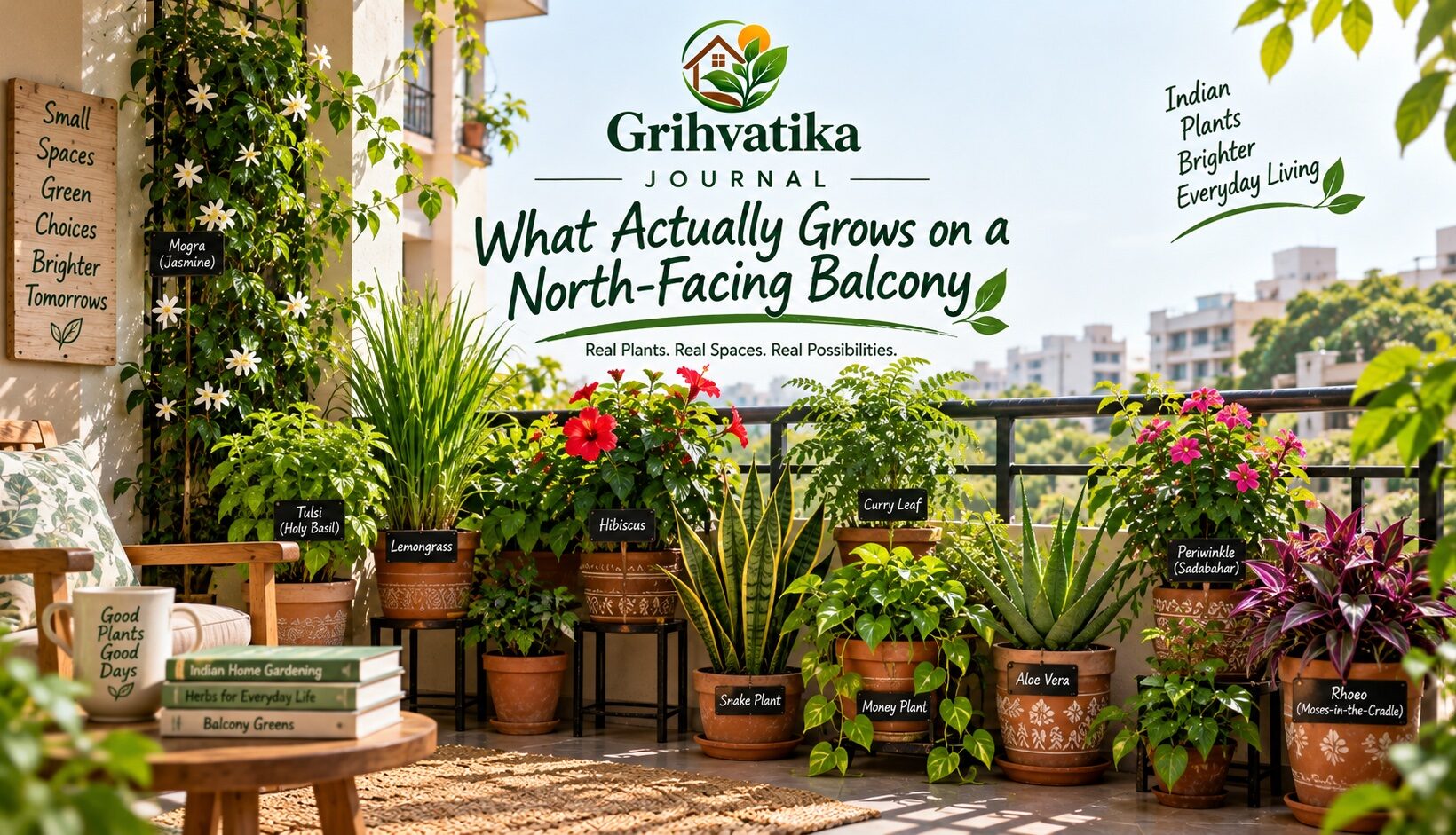
Advice for Indian gardeners assumes sun. A great many flats do not have it — a north aspect, a balcony under the floor above, a light well between two towers. The usual response is to recommend the same tomato and chilli anyway, which produces a pale plant, no fruit, and a household that decides it cannot garden. It can. It just cannot garden with fruit.
First, measure honestly
Sit with the space for one day and note the hours of direct sunlight — sun actually falling on the spot, not general brightness. Phone light meter apps are unreliable for this; your eyes are not. Then read the correct list below and ignore the others.
Two to three hours of direct sun
This is a workable food balcony, provided you drop fruiting crops entirely.
- Coriander — better here than in full sun, which bolts it.
- Mint — genuinely prefers this. Keep it in its own pot.
- Ajwain leaf — thrives, and roots from any snapped stem.
- Spring onion — from kitchen root ends, cuttable in three weeks.
- Lettuce and palak — a thinner crop than in sun, but a real one.
- Curry leaf — slow. Expect leaves in year two, not month six.
- Brahmi and mandukaparni — both want exactly this light, in a wet bowl.
Do not attempt tomato, chilli, brinjal, okra, gourds or beans. They will germinate and grow tall, thin and pale, flower sparsely and set nothing. This is not a technique problem.
Bright shade, no direct sun
Foliage, and it can be beautiful. These are the plants that make a dim balcony look deliberate:
- Money plant — in soil or in a bottle of water. The one plant that will grow anywhere.
- Snake plant — monthly watering, tolerates near-darkness.
- Peace lily — flowers in shade, which almost nothing else does.
- Aglaonema and syngonium — the best colour available without sun.
- Spider plant — and it gives you free plants constantly.
- Maidenhair fern — beautiful and unforgiving; one dry day browns it.
- Bird’s nest fern — on a bracket, no soil needed.
- Chandni (Tabernaemontana) — one of the very few shrubs that flowers properly in shade.
Deep shade
Snake plant and money plant. Both will live; both will grow slowly. Anything else sold to you for this position will decline over a few months, and the shop knew that.
The four adjustments that matter in low light
- Water much less. A shaded pot dries at perhaps a third the rate of a sunny one. Overwatering is the main killer of shade plants — check with a finger, every time.
- Feed less. Slow growth needs less. Half-strength compost tea once a month is plenty; more produces soft growth that mealybug finds first.
- Add reflected light. Painting the back wall white, or standing a white board behind a shelf, makes a visible difference over a season. So does washing the leaves — city dust on a leaf in a dim spot is a real loss of light.
- Wipe and inspect. Shade plus still air is mealybug and scale weather. Wipe the leaves monthly with a damp cloth; you will find problems while they are still one cotton bud of surgical spirit away from solved.
Grow-lights: worth it or not?
For foliage, no. For herbs on a two-hour balcony, a 20 to 30 W LED panel 30 cm above the pots, run for twelve hours a day, genuinely works and costs a few rupees a month. For fruiting vegetables, the wattage needed to matter makes it a hobby rather than a food strategy. Be honest about which you are doing.
And one thing worth more than any of it
If your building has a shared terrace, ask. Most Indian housing societies have an unused roof, and an application for four pots is usually granted — often to general enthusiasm, because somebody has been waiting for a neighbour to ask first. A north-facing flat with terrace access is a full growing space. Several of the community gardens in this programme started exactly that way.
- Review
- Not yet reviewed by a named specialist
- प्रकाशित