
The Seed in Your Kitchen Cupboard
What germinates, what does not, and why it matters
 admin
4 min read
admin
4 min read
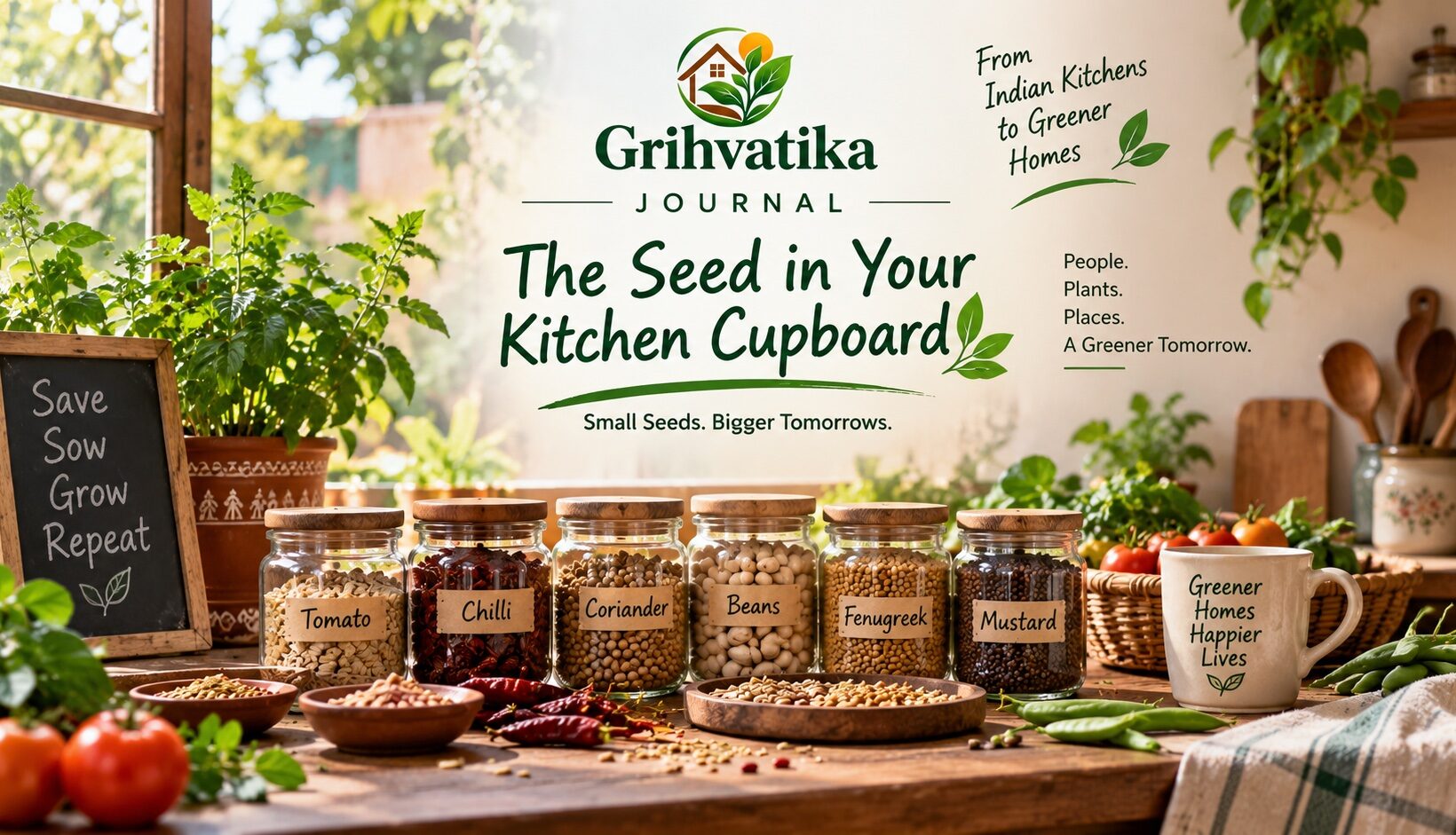
The cheapest seed in India is already in the kitchen. Methi from the masala dabba germinates as well as anything in a packet, and a household that starts there discovers gardening at the cost of a spoonful of seed. But some kitchen seed will never grow, and knowing which is the difference between a tray of greens and three weeks of confusion.
What works, straight from the jar
- Methi (fenugreek) — the best of all. Broadcast thickly, cover half a centimetre, cut the whole tray at three weeks.
- Coriander — rub the round seeds between your palms first to crack the shell; germination roughly doubles. Eight to fourteen days.
- Mustard — sprouts in three days. Grow it for leaves, and let a few flower for the bees.
- Whole moong, chana, rajma — sprout readily. Rajma and moong grow into real plants and crop.
- Sesame, kalonji, ajwain — germinate if reasonably fresh, though slowly.
- Whole dhania, saunf (fennel) — both work, and fennel is worth growing purely for the insects the flowers bring.
What will not work, and why
- Split dal — toor, split moong, masoor dal, chana dal. Splitting destroys the embryo. Whole pulses only.
- Polished or par-boiled rice — the germ is removed. Unpolished paddy with the husk on will grow.
- Roasted anything — roasted jeera, roasted chana, roasted peanut. Heat kills the embryo.
- Irradiated or fumigated spices — a genuine cause of unexplained failure with imported or long-stored spice.
- Very old seed — most kitchen seed loses viability after two or three years. Coriander declines faster than most.
Test before you commit a tray
Fold ten seeds into a damp cloth, keep it in a covered box somewhere warm, and count after five days. Seven or more sprouted: sow normally. Three to six: sow twice as thickly. Fewer than three: it is dead — compost it.
Five days and ten seeds saves a fortnight of watching bare soil and wondering.
Then there is the produce
Half a dozen things in the vegetable basket will regrow rather than germinate, which is faster:
- Spring onion — keep 3 cm of root end, stand it in 2 cm of water for a week, then pot it.
- Ginger and turmeric — a knob with visible growing eyes, planted 5 cm deep in a wide pot in May or June. Eight months to harvest.
- Garlic — a sprouted clove, pointed end up, gives garlic greens in three weeks.
- Lemongrass — a stalk with its base intact, stood in water for ten days.
- Potato — a sprouted one, cut so each piece has two eyes, in a deep bucket with soil mounded up as it grows.
- Coriander with roots — a root with 2 cm of stem, potted damp, will re-leaf.
Fruit seed is a longer game and mostly a disappointing one: a mango or a chikoo from seed takes eight to twelve years to fruit and rarely resembles its parent. Grow those for the plant, not the fruit, and buy a grafted tree if you want to eat.
The catch worth understanding: hybrids
Seed saved from an F1 hybrid vegetable will grow, but the seedlings vary unpredictably — some vigorous, some useless. This is why the tomato you saved from a shop fruit disappointed you.
Save instead from open-pollinated and desi varieties: they come true, year after year. It is worth seeking them out for a second reason. The desi chilli that has grown on your street for forty years, or the lauki your grandmother grew, exists today only because households kept saving and passing on seed. No seed company sells them, and when the last household stops, the variety is gone.
Saving seed properly
- Let it finish. Seed taken green will not grow. Coriander, methi and fennel dry brown and brittle on the stem; chilli and tomato seed comes from a fully ripe, slightly soft fruit.
- Ferment tomato seed in a little water for three days, stirring daily, then wash it clean. That removes the germination-inhibiting coating.
- Dry in shade for three to five days, until a seed snaps rather than bends.
- Store in a labelled paper envelope or an airtight jar with a spoon of dry rice, kept cool and dark. Write the name and the month — you will not remember.
- Keep the biggest and best fruit for seed, not the one you did not fancy eating. You are choosing next year’s plants.
Then give some away. A full envelope is a garden somebody else did not have to pay for, and it is how the varieties survive.
- Review
- Not yet reviewed by a named specialist
- प्रकाशित