
The Amazing Adaptability of Indian Plants
Resilience, seasonal changes and what we can learn
 admin
4 min read
admin
4 min read
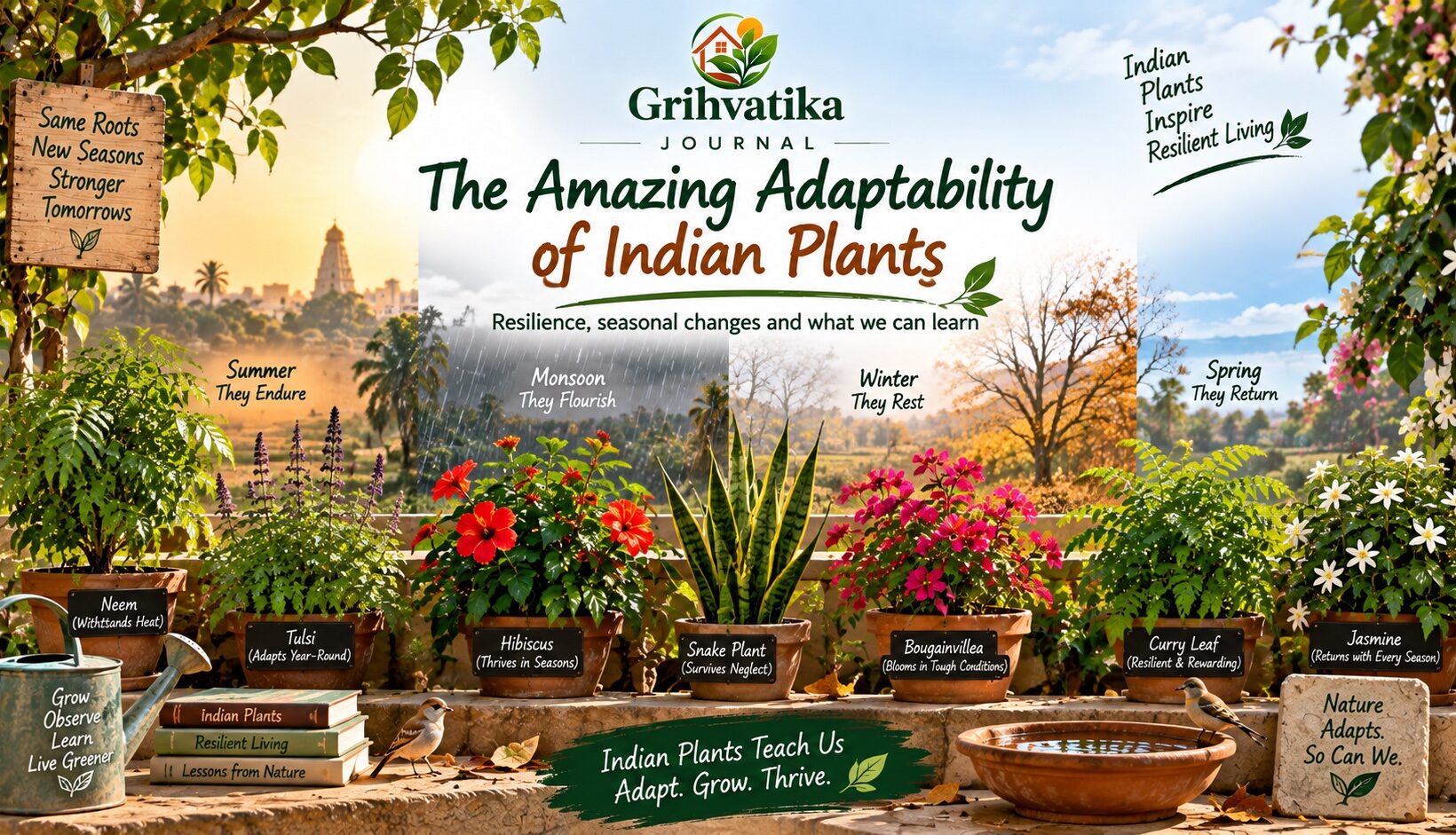
The Indian year is not four gentle seasons. It is a brutal dry spring, a violent wet, a mild productive winter, and in much of the country a fortnight of transition between each. Any plant that survives that unaided has solved a problem, and understanding the solution tells you exactly how to garden.
Strategy one: disappear
The most successful response to a hostile season is to leave. Turmeric, ginger, elephant foot yam, safed musli and the glory lily all spend the dry months as an underground storage organ with nothing above the soil at all. They are not dead in April; they are waiting.
What that means for you: stop watering a dormant pot. Every year, thousands of turmeric and lily tubers rot in February because the pot looked empty and someone kept it wet. Lift the tubers, store them dry, and replant with the first rain.
Strategy two: grow in the gap
Many indigenous herbs are annuals that complete an entire life cycle inside the monsoon or inside the winter, and simply are not present for the rest of the year. Punarnava, bhringraj and kalmegh germinate with the first heavy rain, set seed by October and vanish. Coriander, methi and mustard do the same thing across the cool months.
What that means for you: sowing dates matter more than anything else you do. Coriander sown in October is easy; coriander sown in April bolts in three weeks and you conclude you cannot grow coriander. It is the same seed and the same gardener — only the month is different.
Strategy three: build deep
Khejri roots reach beyond twenty metres in the Thar, which is why it can be in leaf in May when everything around it is bare. Neem, ber and rohida use the same approach on a smaller scale. The investment is slow growth for the first two or three years while the root goes down.
What that means for you: a native tree that seems to be doing nothing in year two is usually working below ground. It is also why deep containers beat wide ones, and why a plant watered deeply twice a week roots far better than one splashed daily.
Strategy four: change the leaf
Aloe and the desert milkweeds store water in thick tissue and open their pores at night rather than in the day. Lemongrass and vetiver roll their narrow leaves in the heat to cut the surface losing moisture. Palash and semal drop every leaf before the hottest weeks and flower on bare wood, spending nothing on foliage it cannot support.
What that means for you: a plant that looks bad in May is not necessarily a plant in trouble. A palash with no leaves in April is behaving correctly. Judge a native plant in the season it was built for.
Strategy five: use the rain properly
The monsoon is not simply water; it is water arriving faster than soil can absorb it. Bamboo, taro, reeds and paddy tolerate saturated ground. Most other plants do not, and this is the great killer of Indian container gardens — not the drought of May but the drowning of July.
What that means for you: in the monsoon your job changes from adding water to letting it leave. Lift pots onto bricks, check that drainage holes have not silted up, and move containers away from a wall that sheets water. More balcony plants die in July than in May, and almost all of them drown.
What this adds up to
Gardening with indigenous plants is mostly a matter of not fighting the year:
- Sow with the season rather than when you happen to feel like it. October and June are the two big windows in most of India.
- Accept dormancy. An empty-looking pot in April may be a full one.
- Water deep and infrequently, which is what these plants evolved to receive.
- Prioritise drainage over irrigation. It is the more common failure by a wide margin.
- Mulch. Bare soil in an Indian summer reaches temperatures that kill roots outright; two centimetres of dry leaves changes that.
- Choose plants for your region and month, not from a photograph. A plant suited to Kerala’s humidity will struggle in Delhi’s May whatever you do for it.
The plants have already worked out how to live here. Most of gardening in India is arranging not to get in their way.
- Review
- Not yet reviewed by a named specialist
- प्रकाशित