
Creating Pollinator-Friendly Spaces
Small changes, big impact
 admin
4 min read
admin
4 min read
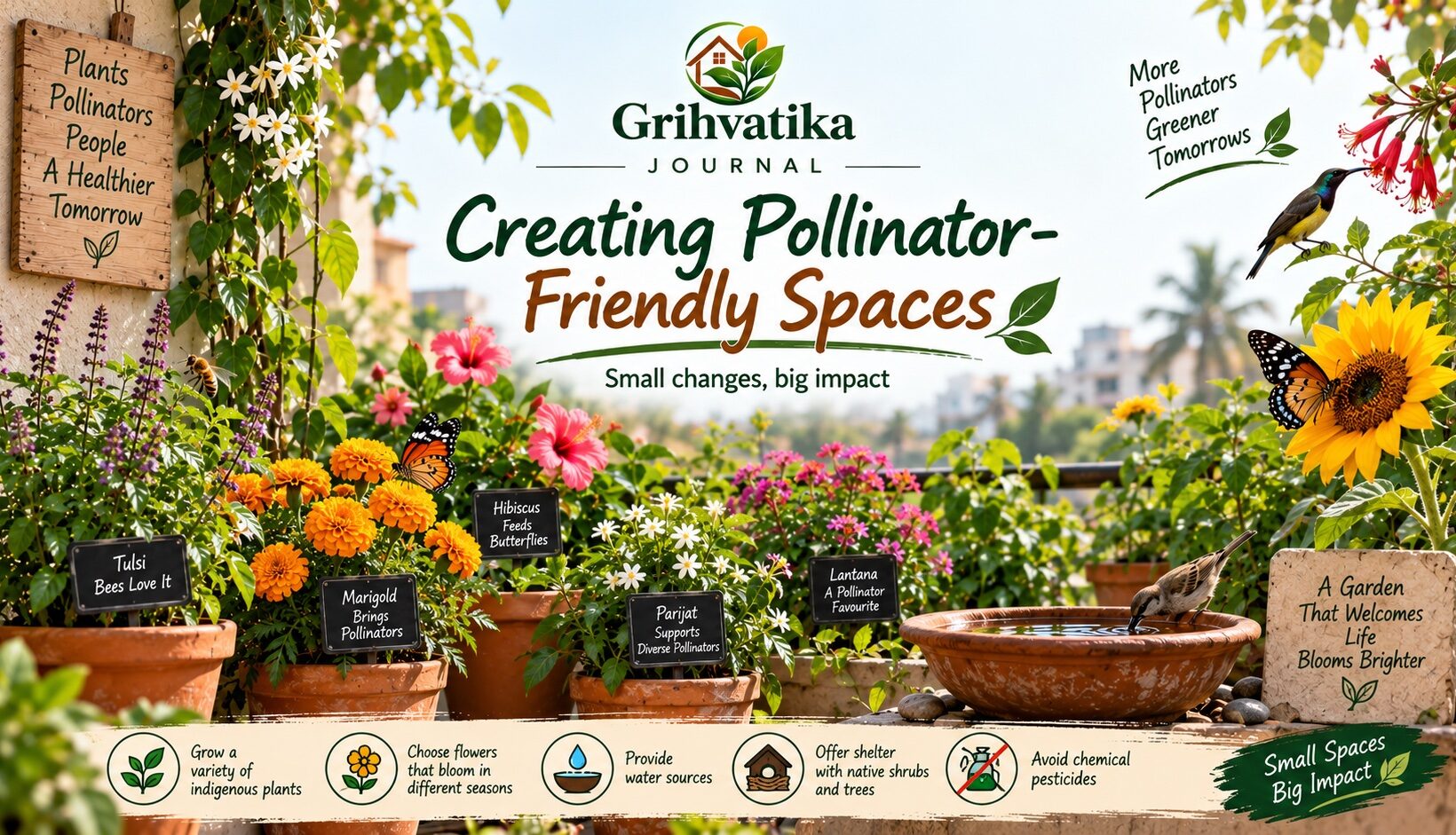
A balcony is not too small to matter. Bees forage over a few hundred metres to a couple of kilometres; butterflies pass through on far longer routes. In a city, the limiting factor is rarely space — it is that flowers appear in ornamental bursts and then nothing, and there is nowhere to drink.
Three native flowering plants beat twenty ornamentals
Many of the bedding plants sold as colour are bred for size and doubled petals, which is exactly what makes them useless: the nectaries are buried under extra petals, or bred out altogether. A double-flowered hibiscus is a decoration; a single one is a canteen.
Choose single, open flowers. If you can see into the centre of the flower, an insect can too.
The reliable performers for an Indian balcony, in rough order of usefulness:
- Tulsi — let it flower. The spikes are worked by bees from morning to mid-afternoon.
- Single hibiscus — sunbirds find a new plant within a week, and carpenter bees work it all day.
- Hamelia — orange tubes, continuously, and the most dependable sunbird plant in a small garden.
- Marigold, deadheaded weekly — hoverflies, small wasps, ladybirds.
- Coriander or fennel left to flower — the best forage of all for the tiny beneficial insects.
- Ixora, lantana in a pot, duranta — butterfly nectar through the warm months.
- Curry leaf and lemon — not for nectar, but as caterpillar food for the common mormon and lime butterflies.
Plant in clumps, not singles
A pollinator that has to travel between scattered plants spends more energy than it gains. Three pots of the same plant together are visited far more than three different plants spread along a railing. Group by species, and keep something in flower in each of the four seasons — that continuity is what a city almost never offers.
Water is the missing piece
This is the single highest-return change on any balcony, and it costs nothing. Bees and butterflies need water and cannot land on an open surface without drowning.
- A shallow dish — a terracotta saucer is ideal.
- Fill it with pebbles or coarse gravel so the stones break the surface. That is the landing platform.
- Water to just below the top of the stones.
- Change it every second day. This matters: standing water for a week is a mosquito nursery, and undoes the good you were trying to do.
A patch of damp bare soil or sand in a tray serves the same purpose — butterflies gather at wet mud for minerals, a behaviour called mud-puddling, and will use a tray as readily as a riverbank.
Stop spraying, and mean it
Broad-spectrum insecticides do not distinguish. They kill the aphid, the ladybird that was eating the aphid, and the bee that landed on the flower afterwards, and residue persists on foliage for days. On a balcony where you also want pollinators, they are self-defeating.
If you must treat something, treat the affected plant only, use neem-and-soap, spray at dusk when pollinators are not flying, and never spray anything in flower. Better still, identify the pest first and deal with it by hand — most balcony infestations are small enough to wipe off with a cloth.
Leave the mess
Tidiness is the quiet enemy of insect life:
- Leave fallen leaves on pot surfaces. They shelter the small insects that pollinate next season, and they mulch the soil for you.
- Let a corner go unpruned. Hollow stems and dry seedheads are where solitary bees nest.
- Accept some chewed leaves. A garden with no caterpillars will have no butterflies. Leaf damage on a curry leaf or lemon in the monsoon is usually a butterfly larva, not a pest.
- Shield your lights. Bright unshielded outdoor bulbs disorient moths, which are significant night pollinators. A warm, downward-facing bulb is enough.
What you should expect to see
Roughly, on a four-hour-sun balcony that gets this right:
- Week 1 to 2: honeybees and small carpenter bees on the tulsi and hibiscus.
- Week 3 to 6: a sunbird, if you have hamelia or hibiscus. They are territorial and will return daily.
- Month 2 to 3: plain tiger, common mormon and grass yellow butterflies, and hoverflies at the coriander flowers.
- Month 3 onward: caterpillars on the citrus and curry leaf, and — if you left the leaf litter alone — spiders and ladybirds resident enough to keep the aphids down without you.
Six pots, one water dish, and no spray. That is the whole intervention, and it is enough.
- Review
- Not yet reviewed by a named specialist
- प्रकाशित