
A Street That Planted Itself
How eleven households turned a service lane into a garden
 admin
4 min read
admin
4 min read
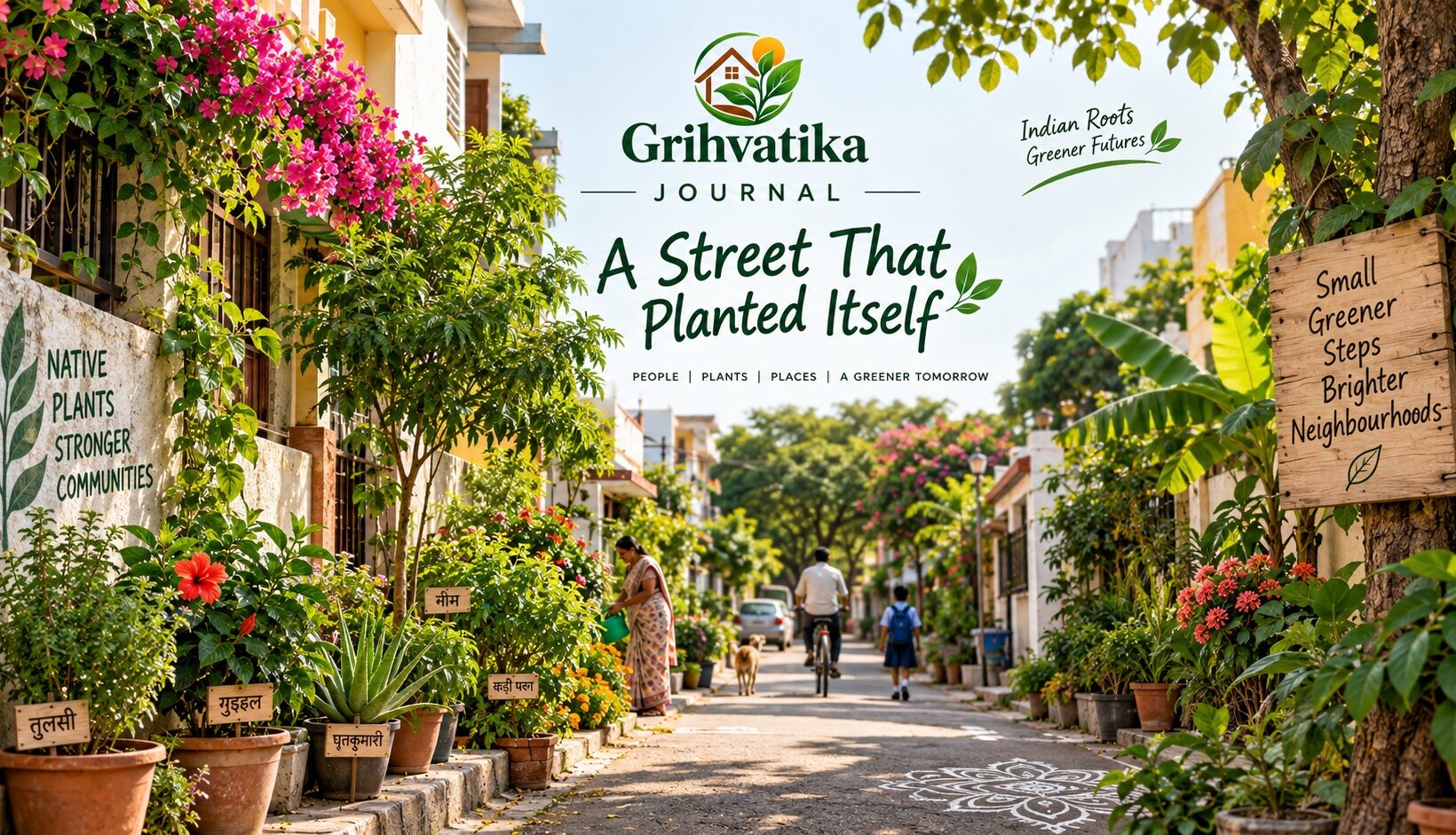
This is the pattern we see most often in community garden registrations, described plainly, because the interesting part is not the planting — it is the sequence. Almost every lane garden that lasts goes through roughly the same steps, and almost every one that fails skips the same two.
Month one: one person, four pots
It starts with somebody putting pots outside their own gate — usually a tulsi, a curry leaf and two troughs of greens. Nothing is organised. Two neighbours ask what the greens are. One of them asks for a cutting.
Why this matters: a lane garden that begins with a meeting almost always stalls. A lane garden that begins with something visibly growing gets participants, because people join a thing that is already working, not a proposal.
Month two: the water question
This is where most attempts end. Twenty pots need water every day in summer, and enthusiasm does not survive a fortnight of one person carrying cans.
The arrangements that hold, in our experience:
- A tap. Ideally a shared connection with the society’s permission. Best outcome by a long way.
- A 200-litre drum filled weekly, with mugs kept beside it. Works well and costs almost nothing.
- A written rota of households, one week each. Works only if it is actually written down and stuck somewhere visible. Verbal rotas fail within a month.
Settle water before adding a single further pot. Everything else can be improvised; this cannot.
Month three: four people, and a name
Once three or four households are involved, the character changes. Somebody starts a WhatsApp group. Somebody paints a sign. Somebody’s father, who gardened in a village fifty years ago and had said nothing so far, turns out to know more than everybody else combined and quietly takes over the pruning.
Fewer than four households and it stalls the first time one person travels. Four is the number at which the garden survives its founder going away for two weeks.
Month four to six: the trouble
Every lane garden meets the same three problems.
Somebody objects. Usually about parking, mosquitoes, or “who gave permission”. The gardens that survive this are the ones that had asked the society or the RWA before planting, even informally, and that respond by moving two pots rather than arguing. The ones that fail are the ones that treated the lane as theirs.
Something gets stolen or trampled. Almost always in the first three months, almost always resolved by moving the plants nearer the gates and adding a low border of bricks. Plants at a defined edge get respected; plants in an ambiguous middle do not.
Mosquito complaints. Take these seriously and immediately — they are the fastest way for a garden to lose community support. No standing water in saucers, drums covered, and any water dish changed every second day. Say so publicly when you have done it.
Month eight: it becomes ordinary
The point at which a lane garden is safe is the point at which it stops being a project. Children water it because that is what you do after school. The vegetable seller leaves the outer cabbage leaves for the compost drum. Somebody’s grandmother sits on the step by the tulsi in the mornings. Nobody is in charge, and that is the sign of success rather than a problem.
What eleven households ended up with
- Two compost drums, taking the wet waste of nine of the eleven homes.
- Fourteen fruiting or leaf-cropping plants — curry leaf, three chillies, lemon, guava in a drum, papaya, moringa and troughs of greens.
- A tulsi at each end of the lane, and marigold and hamelia between them, which brought sunbirds within a month.
- A brick-edged strip where the lane had been a place to dump rubble, and — the change everybody actually mentions — nobody dumps rubble there any more.
If you want to start one
- Plant something yourself first. Four pots outside your own gate. Do not call a meeting.
- Ask the society or RWA early and informally, before you expand. This one step prevents most of the later trouble.
- Solve water before pot number ten.
- Get to four households before you get to forty pots.
- Define the edge with bricks or a low border, so the garden is visibly a garden.
- Deal with the mosquito question before anybody raises it.
- Register it with us — we send a regional planting plan, seed for your area and a printed sign for the gate, which turns out to matter more than it sounds.
- Review
- Not yet reviewed by a named specialist
- Published