
Composting at Home
Two buckets, no smell, soil in eight weeks
 admin
4 min read
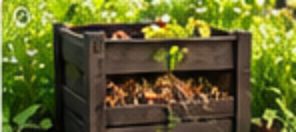
What you get: about 5 kg of finished compost every two months from an ordinary household’s kitchen waste, in a corner of a balcony, with no smell and no flies — if you get one ratio right.
The one rule that decides whether this works
Compost needs roughly one part wet kitchen waste to two parts dry brown material, by volume. Wet waste alone turns into a stinking anaerobic sludge. That is the whole reason home composting fails, and the fix is simply keeping a bag of dry material next to the bin.
Wet, or “green”: vegetable and fruit peel, cooked food in small amounts, tea leaves, coffee grounds, eggshell (crushed), flowers from puja, soft garden trimmings.
Dry, or “brown”: dry fallen leaves, shredded newspaper and cardboard, sawdust, coco peat, dried grass, sugarcane bagasse, the husk from a coconut. Keep a sack of dry leaves on the terrace — this is the material everybody runs out of.
Keep out: meat, fish and bones (they attract crows, cats and rats), dairy, oil and fried food, plastic-lined tea bags, glossy printed paper, pet faeces, and anything treated with pesticide.
Setting up — two 20-litre buckets
- Take two buckets with lids. Punch 8 to 10 holes of about 6 mm in the sides of each, in two rings, plus four in the base. Air matters more than anyone expects; these holes are the difference between compost and sludge.
- Stand each bucket on two bricks over a tray, so the holes are not sealed against the floor and any liquid can be caught.
- Line the base with 5 cm of dry leaves or torn cardboard.
- Add two handfuls of finished compost, garden soil or cow dung. This is the starter culture; without it the pile takes weeks to get going.
You use one bucket until it is full, then leave it to finish while filling the second. That is why there are two.
The daily routine — about a minute
- Chop the day’s peel roughly. Pieces smaller than about 3 cm break down two to three times faster.
- Tip it in and immediately cover it with twice as much dry material. Never leave wet waste exposed on the surface — that is what flies lay in.
- Every third day, turn the top half with a trowel or an old stick.
- Put the lid on loosely. A sealed lid suffocates the pile; no lid invites rain and animals.
Moisture test: squeeze a handful. It should feel like a wrung-out cloth — damp, with no water running out. Too dry and nothing happens; too wet and it goes sour. Correct dry piles with a sprinkle of water, wet ones with a big handful of dry leaves.
What you should see, and when
- Days 3 to 10: the middle of the pile becomes warm to the touch. This is correct and means the bacteria are working.
- Weeks 2 to 4: the volume drops by roughly half. Keep adding.
- Weeks 4 to 6: once the bucket is full, stop adding, cover it, and turn it weekly. Start on bucket two.
- Weeks 6 to 10: the contents turn dark brown, crumbly and smell of wet forest floor. Individual peels are no longer recognisable. That is finished compost.
Sieve it through a kitchen sieve or a mesh. The fine material goes on the plants; the coarse lumps go back in as starter for the next batch.
How to use it
- New pots: one part compost to three parts of the rest of the mix.
- Existing pots: a 2 cm layer on the surface every six weeks, scratched in lightly. Do not bury the stem.
- Compost tea: one mug of compost in a bucket of water overnight, strained, used as a fortnightly feed.
Do not use unfinished compost on plants. Material still breaking down takes nitrogen out of the soil and can burn roots. If in doubt, give it another two weeks.
Fixing the four things that go wrong
- It smells of ammonia or sewage — too wet, too much green, not enough air. Add a large volume of dry leaves, turn thoroughly, and leave the lid off for a day. It recovers within 48 hours.
- Small flies — wet waste left exposed. Bury everything under dry material and add a 3 cm layer of soil or coco peat over the whole surface.
- Nothing is happening, weeks later — too dry, or too coarse. Sprinkle water to wrung-cloth damp, chop the material finer, and add a handful of cow dung or old compost.
- White threads and fuzz — that is fungal mycelium doing its job. Leave it alone.
If a bucket is too slow: try a worm bin
Add 100 to 200 g of composting worms (Eisenia fetida, sold as red wigglers) to a shaded bin at 20 to 30 °C. They will process kitchen waste in three to four weeks instead of eight, and the vermicompost is richer. Worms need shade, constant damp and no citrus, onion, chilli or salt — keep those for the ordinary bucket.
- Review
- Not yet reviewed by a named specialist
- Published