
Pests Without Poison
Identify it first, then treat only what you found
 admin
4 min read
admin
4 min read
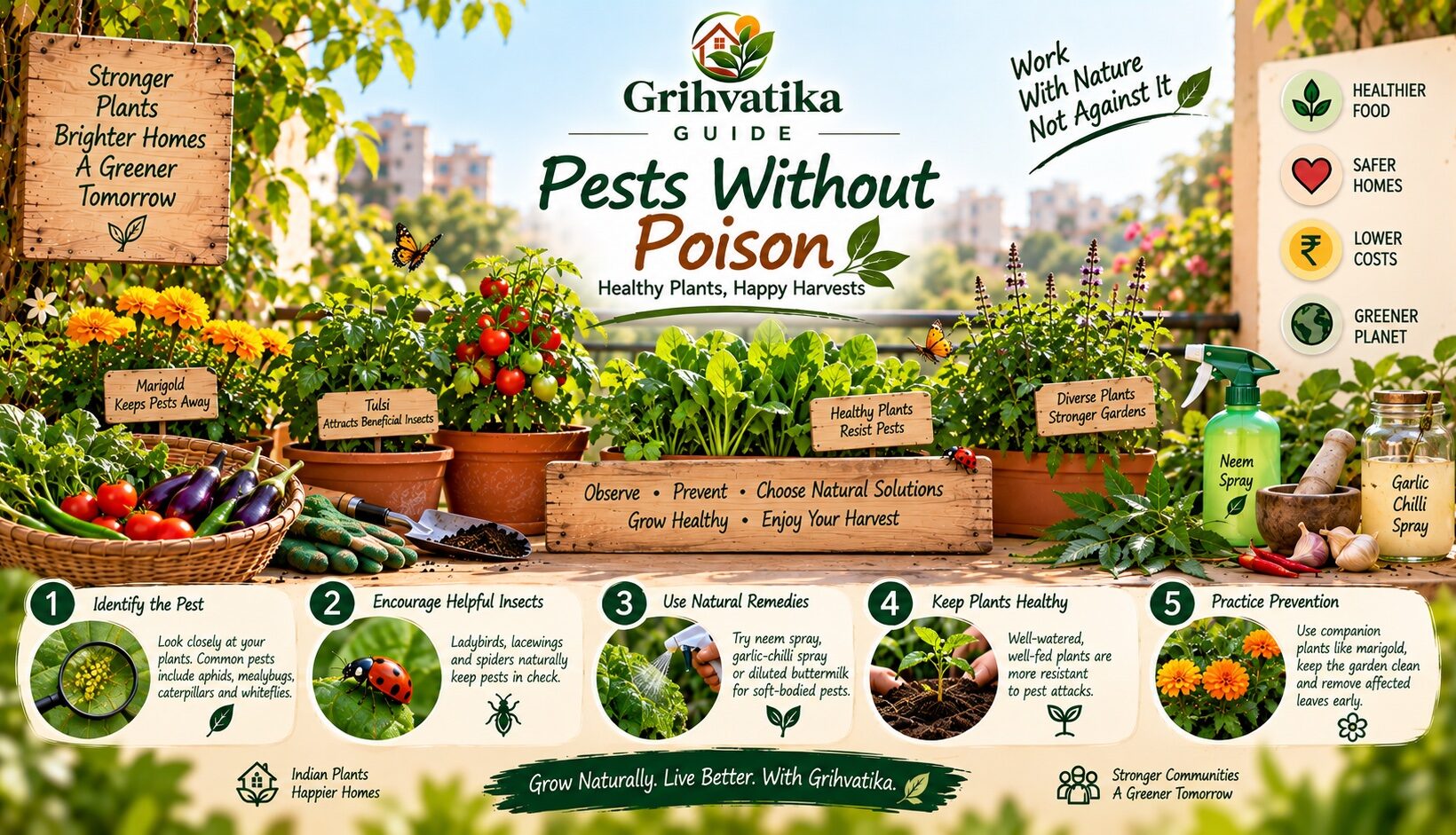
What you get: a way to identify the six pests that cause almost all trouble on Indian balconies and terraces, and to treat each without buying anything you would not keep in the kitchen.
Look before you spray
Turn the leaf over. Almost every pest lives on the underside, and a broad-spectrum spray applied blind kills the ladybirds and spiders that were already eating the problem. Check twice a week — a pest found early takes one treatment, and the same pest found late takes a month.
The six you will actually meet
1. Aphids — tiny green, black or grey insects clustered on new growth
Leaves curl, growth is sticky, ants patrol the stem (the ants farm the aphids for that stickiness). Very common on hibiscus, chilli, mustard and coriander.
Treatment: knock the colony off with a firm spray of plain water. If they return, spray 5 ml neem oil plus 2 drops of dish soap in 1 litre of water, over both leaf surfaces, at dusk. Repeat after five days, three times in all. Wipe the ant trail off the stem with a damp cloth.
2. Whitefly — a cloud of small white insects that lifts when you touch the plant
Leaves yellow and become sticky. Common on brinjal, tomato and okra.
Treatment: hang a yellow sticky trap — a piece of yellow card smeared with castor oil or petroleum jelly — at plant height; the adults fly to yellow. Spray the leaf undersides with the neem-and-soap solution every five days.
3. Spider mite — fine webbing under leaves, and a dusty stippled look on top
Worst in hot dry weather, April to June. Leaves turn bronze and drop.
Treatment: mites hate humidity, so spray the undersides with plain water every single day for a week. Follow with neem-and-soap twice, five days apart. Move the pot out of hot dry wind.
4. Mealybug — white cottony blobs in leaf joints and along stems
Slow-moving and protected by wax, so sprays alone rarely work. Common on curry leaf, hibiscus and money plant.
Treatment: dab each blob with a cotton bud dipped in surgical spirit or neat rubbing alcohol; the wax dissolves at once. Then spray the whole plant with neem-and-soap weekly for three weeks to catch the ones you missed. Check the soil surface too — some species live at the root.
5. Caterpillars — holes in leaves and dark pellets of droppings
The droppings tell you where the caterpillar is sitting, usually within a few centimetres.
Treatment: hand-pick at dusk or after dark, when they feed. This is more effective than any spray. For a severe infestation on a food crop use Bacillus thuringiensis (Bt), a bacterial powder sold in nurseries — it affects caterpillars only and is safe on a vegetable you will eat.
Before you kill it: a caterpillar on a lemon, curry leaf or milkweed is very likely a butterfly larva. Leave those. A little leaf damage is the price of the butterflies.
6. Fruit fly — okra, gourds and brinjal that rot from a pinhole
Treatment: pick and destroy every affected fruit, off-site — do not compost them. Hang a trap: a bottle with a little jaggery water and a few drops of vinegar. Harvest young and often; a fruit left to over-ripen is an invitation.
Two sprays are enough
Neem oil spray — 5 ml cold-pressed neem oil, 2 drops of dish soap, 1 litre of water. Shake constantly while spraying; oil separates. Use it the same day. Spray at dusk, never in sun, or the oil burns the leaf. Covers most sucking pests.
Garlic and chilli spray — 10 cloves of garlic and 4 green chillies blended in 500 ml water, left overnight, strained, then diluted 1:5. A useful repellent for beetles and leaf-eaters. Wear gloves and keep it away from your eyes.
Test either on two leaves and wait 24 hours before spraying a whole plant, especially a young or a fern-leaved one.
Prevention beats every spray
- Do not crowd pots. Air moving between plants prevents most fungal problems outright.
- Water the soil, in the morning. Wet leaves overnight are how mildew and blight begin.
- Mix your planting. Marigold at the edge of a vegetable bed, tulsi and mint nearby, and coriander or fennel left to flower — the flowers bring the hoverflies and ladybirds that eat aphids for you.
- Mix neem cake into the potting mix — a handful per bucket deters soil-dwelling pests from the start.
- Inspect any new plant before it joins the others. One nursery plant with mealybug will infest a whole balcony. Keep it apart for a week.
- Feed properly. Soft, over-fed, nitrogen-rich growth is what aphids seek out first.
- Clear fallen leaves and fruit from pot surfaces; that is where spores and eggs overwinter.
Do not use these
Avoid broad-spectrum synthetic insecticides on a food balcony. They kill pollinators and predators along with the pest, leave residue on the leaves you are about to eat, and the pest population recovers faster than the predators do — so the second outbreak is worse than the first. If a plant is beyond saving, take it out and start again; that is cheaper and safer than escalating chemicals in a space where children play.
- Review
- Not yet reviewed by a named specialist
- Published